
 German
  English
  Spanish
  French
  Portuguese
  Dutch
Dutch  Italian
  Thai
Thai Indoor gardening has evolved rapidly in recent years, driven by the need for controlled environments, consistent yields, and year-round plant cultivation. Whether for home growers, small-scale hydroponic setups, or compact grow tents, lighting plays the most critical role in plant development.
Among all available options, 150W LED grow lights have become one of the most widely used categories. They offer a balanced combination of energy efficiency, sufficient light output, and manageable coverage area, making them ideal for small to medium indoor growing setups.
Unlike traditional lighting systems such as HPS (High Pressure Sodium), modern LED grow lights deliver targeted light spectrum, lower heat output, and significantly longer lifespan. This allows growers to optimize plant growth while reducing operational costs.
This guide provides a complete, engineering-level understanding of 150W LED grow lights, including spectrum, coverage, technical specifications, applications, energy savings, and how to choose the right system.
schnelle Antwort
A 150W LED grow light is a medium-power indoor lighting solution designed for small to mid-sized grow spaces. It typically covers 1.5×1.5 ft to 3×3 ft areas, delivers 250–400 µmol/s PPF, and supports both vegetative and flowering stages when using full-spectrum LEDs.
Schlüssel zum Mitnehmen
- 150W grow lights are ideal for small indoor setups and grow tents
- Full-spectrum lighting supports complete plant lifecycle
- PPFD and efficiency matter more than wattage alone
- LED systems reduce energy consumption by 40–60% compared to HPS
- Proper hanging height is critical for optimal growth
- ROI is typically achieved within 6–12 months
What is a 150W LED Grow Light
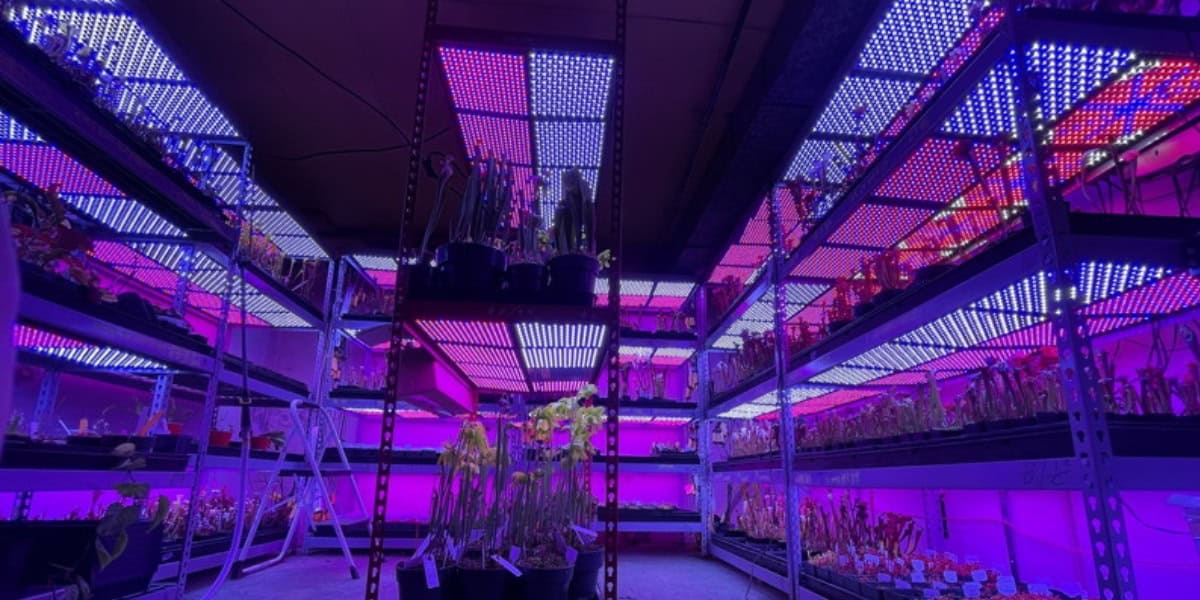
A 150W LED grow light is a controlled-spectrum lighting system designed to replicate natural sunlight for plant growth in indoor environments. The “150W” refers to the actual power consumption of the fixture, not the equivalent output of older lighting technologies.
Unlike traditional lighting, LED grow lights use semiconductor-based chips that emit specific wavelengths required for photosynthesis. This allows plants to grow efficiently without wasted energy.
For a complete technical breakdown, explore our 150W LED grow and flood lights design and performance guide.
Technical Specifications
| Parameter | Typischer Wert |
| Stromverbrauch | 150W ±10% |
| PPF Output | 250–400 µmol/s |
| Leistungsfähigkeit | 2.0–2.8 µmol/J |
| Input Voltage | AC 100–277V |
| Lebensdauer | 50,000+ hours |
| Abstrahlwinkel | 90°–120° |
Engineering Insight
The real performance of a grow light is not determined by wattage alone. Instead, PPF (Photosynthetic Photon Flux) and efficiency define how much usable light plants actually receive.
Spectrum and Light Requirements
Plants require specific wavelengths of light to perform photosynthesis and regulate growth cycles. A 150W LED grow light must deliver a balanced spectrum to support all growth stages.
Key Light Spectrums
| Spektrum | Wellenlänge | Aufgabe |
| Blaulicht | 400–500 NM | Vegetative growth, leaf development |
| Rotlicht | 600–700 NM | Flowering and fruiting |
| Weit rot | 700–750 NM | Flower enhancement |
| Full Spectrum | 300–800 nm | Complete growth cycle |
Erläuterung
- Blaulicht promotes compact growth and strong stems
- Rotlicht triggers flowering and increases yield
- Full spectrum LEDs combine all wavelengths, eliminating the need for multiple lights
Practical Insight
For most indoor growers, full-spectrum 150W LED lights are the best option because they support plants from seedling to harvest without requiring spectrum switching.
Coverage Area and Hanging Height
Coverage area defines how much grow space a 150W LED grow light can effectively illuminate, while hanging height determines how efficiently that light reaches plant surfaces. These two factors must be optimized together because light intensity decreases as distance increases.
In practical growing environments, improper coverage planning often leads to uneven plant growth, light stress, or energy waste.
Coverage and Height Guidelines
| Wachstumsstadium | Deckungsbereich | Hanging Height | Light Intensity (PPFD) |
| Sämling | 3 × 3 ft | 24–30 Zoll | 100–300 µmol/m²/s |
| vegetativ | 2 × 2 ft | 18–24 Zoll | 300–600 µmol/m²/s |
| blühend | 1.5×1.5 ft | 12–18 Zoll | 600–900 µmol/m²/s |
Technical Explanation
At higher mounting positions, light spreads over a larger area but intensity drops due to dispersion. At lower heights, intensity increases significantly, but coverage becomes limited and hotspots may form.
This relationship follows the inverse square law, meaning light intensity decreases rapidly as distance increases.
Practical Insight
- Seedlings require lower intensity, so lights are placed higher
- Flowering plants require strong light, so lights are placed closer
- Uniform canopy coverage is more important than maximum brightness
Important Note
Incorrect positioning can cause:
- Light burn → leaves curl or bleach due to excessive intensity
- Stretching plants → weak stems due to low light
- Uneven growth → inconsistent canopy development
Proper height adjustment ensures balanced PPFD distribution and consistent plant growth.
Types of 150W Grow Lights
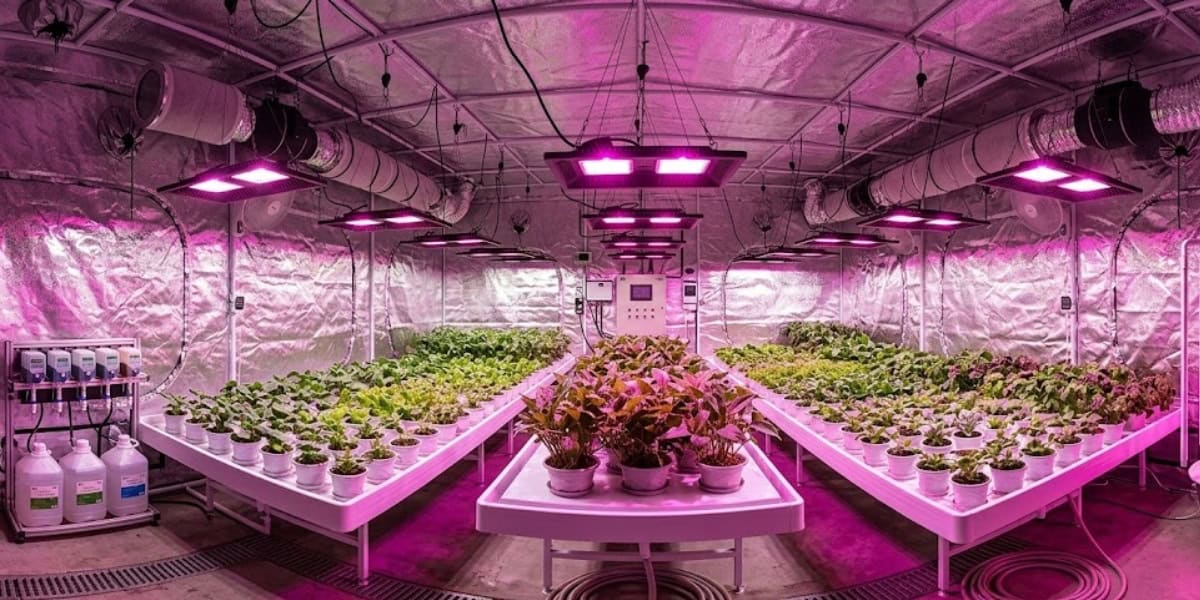
The design of a grow light directly affects light distribution, efficiency, and heat management. Even at the same wattage, different technologies produce different results.
Main Types of 150W Grow Lights
| Typ | Leistungsfähigkeit | Light Distribution | Wärmeleistung | Beste Anwendung |
| Quantum Board | 2.5–2.8 µmol/J | Wide & even | naturge | Heimzüchter |
| COB LED | 1,8–2,2 µmol/J | Focused | high | Targeted lighting |
| Bar Light | 2.5–2.7 µmol/J | Uniform across canopy | Medium | Professional setups |
Quantum Board Lights
These use multiple small LED chips spread across a flat board, creating uniform light distribution. They are highly efficient and reduce hotspots, making them ideal for beginners and small grow tents.
COB (Chip-on-Board) Lights
COB lights concentrate multiple LEDs into a single point source. This produces strong penetration but generates more heat and less uniform coverage.
Bar Lights
Bar-style lights distribute LEDs across multiple linear strips, improving canopy coverage and reducing shadow areas. These are often used in advanced setups.
Selection Insight
For most indoor growers, quantum board 150W lights offer the best balance of efficiency, coverage, and cost.
For deeper comparison of grow light structures and performance, see our complete 150W LED grow light system guide.
150W Grow Light vs Other Wattages
Choosing the correct wattage is essential because it determines coverage, intensity, and scalability of the grow setup.
| Leistung | Deckungsbereich | PPFD-Bereich | Anwendung | Suitability |
| 100W | 1×1 ft | 200–400 | Seedlings | Basic |
| 150W | 2 × 2 ft | 300–900 | Full cycle | Balanced |
| 300W | 3×3 ft+ | 600–1200 | Large grow | fortgeschritten |
Erläuterung
- 100W systems are limited to early-stage growth
- 150W provides enough intensity for full plant lifecycle
- 300W is used for higher yields and larger areas
Practical Insight
150W is ideal because it:
- Covers a manageable area
- Provides sufficient intensity for flowering
- Maintains energy efficiency
This makes it the most practical option for beginners and small-scale growers.
For a full system-level comparison and real-world applications, read our 150W LED grow lighting performance guide.
How to Choose a 150W Grow Light
Selecting a grow light is not just about wattage. It requires evaluating performance, efficiency, and compatibility with your grow setup.
Step-by-Step Selection Approach
- Measure your grow space
Determine the exact area (ft² or m²) to avoid under- or over-lighting. - Check spectrum quality
Ensure full-spectrum output for complete plant growth. - Evaluate PPF and efficiency
Higher µmol/J means better energy utilization. - Analyze heat management
Proper cooling prevents performance degradation. - Verify build quality and reliability
A good manufacturer ensures consistent output and lifespan.
| Faktor | Ideal Value | Why It Matters |
| Leistungsfähigkeit | ≥2.5 µmol/J | Energieeinsparung |
| PPF Output | 300–400 µmol/s | Growth performance |
| Spektrum | Full spectrum | All growth stages |
| Cooling | Passive + heat sink | Stability |
| Gewähr | 2–3 years | Reliability |
Efficiency and spectrum quality have a greater impact on plant growth than wattage alone. A poorly designed 150W light can perform worse than a high-quality 100W system.
To explore professional selection criteria and system design considerations, check our 150W LED grow light engineering and application guide.
Applications of 150W Grow Lights
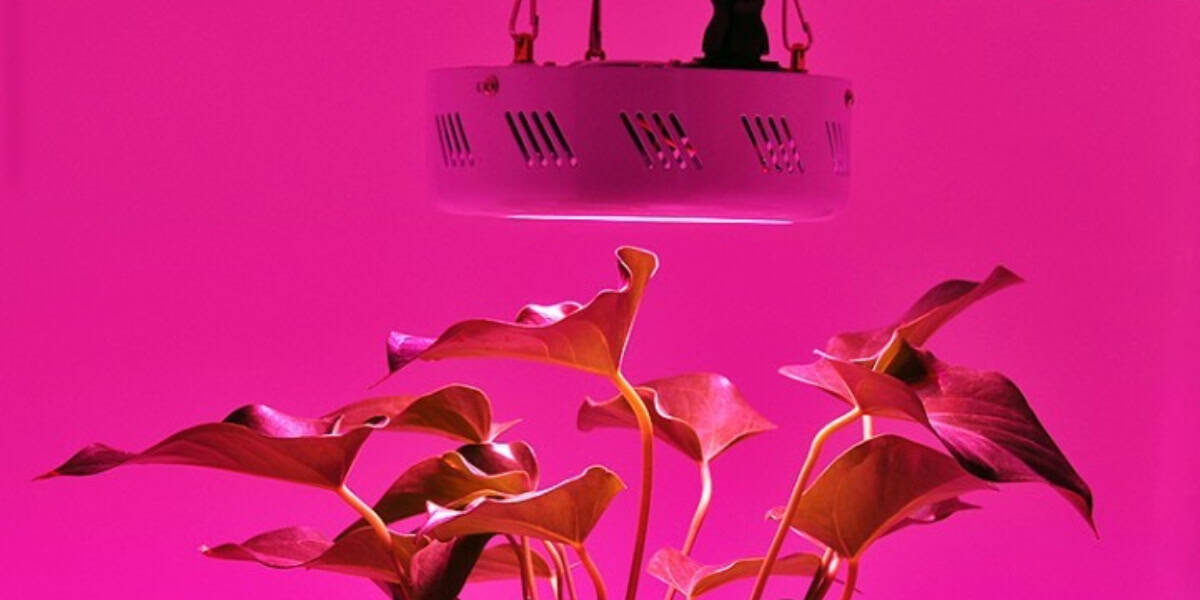
150W LED grow lights are widely used due to their flexibility and balanced performance across different indoor growing environments.
Different plant stages require different spectrum and intensity setups. Learn more in our grow lights for blooms: best spectrum, intensity and setup guide.
| Anwendung | Lichtanforderung | Key Benefit | Typical Plants |
| Indoor Gardening | Medium intensity | Compact setup | Herbs, greens |
| Grow Tents | Controlled PPFD | Efficient growth | Vegetables |
| Hydroponics | Stable output | Faster growth | Lettuce, basil |
| Small Farms | Consistent yield | Energieeinsparung | Tomatoes, peppers |
Indoor Gardening
Ideal for small spaces where natural sunlight is limited. The compact size and controlled output make 150W lights suitable for home use.
Grow Tents
Provides controlled light environment, ensuring consistent plant growth regardless of external conditions.
Hydroponics Systems
Supports faster nutrient uptake due to optimized light spectrum and intensity.
Vegetables and Herbs
Suitable for crops that require moderate light levels and consistent cycles.
Practical Insight
The versatility of 150W grow lights makes them suitable for both beginners and experienced growers working in limited spaces.
For real-world grow light applications and system design, see our 150W LED grow lighting application guide.
Energy Saving and ROI Analysis
One of the biggest advantages of LED grow lights is their ability to reduce energy consumption while maintaining high performance.
Energy Comparison
| Beleuchtungsart | Stromverbrauch | Lebensdauer | Leistungsfähigkeit |
| HPS | 250W | 10,000 hrs | naturge |
| LED (150W) | 150W | 50,000 hrs | high |
Performance Breakdown
- Energy savings: 40–60%
- Heat reduction: significantly lower
- Maintenance cost reduction: up to 80%
- ROI period: 6–12 months
Real Insight
LED lights not only consume less electricity but also reduce cooling costs, which is a major factor in indoor grow environments.
For detailed efficiency analysis and system performance data, explore our 150W LED grow light efficiency and design guide.
Häufige Fehler zu vermeiden
Many growers fail to achieve optimal results due to incorrect setup and lack of understanding of lighting parameters.
Common Issues and Impact
| irren | Problem | Result |
| Light too close | Excess intensity | Leaf burn |
| Light too far | Low intensity | Weak growth |
| Wrong spectrum | Poor photosynthesis | Low yield |
| Over-lighting | Energy waste | Stress on plants |
| Poor coverage | Uneven light | Inconsistent growth |
Solution
Proper planning of height, spectrum, and coverage ensures maximum efficiency and healthy plant development.
Buying Checklist
Before selecting a 150W grow light, evaluate all key technical parameters to ensure long-term performance.
Technical Checklist
| Parameter | Ideal Value | Zweck |
| Leistungsfähigkeit | ≥2.5 µmol/J | Energy performance |
| PPF | 300–400 µmol/s | Growth intensity |
| Lebensdauer | 50,000 hrs | Durability |
| Spektrum | Full spectrum | Complete growth |
| Cooling System | Efficient heat sink | Stability |
| Bauqualität | Aluminum housing | Heat dissipation |
Final Insight
A well-balanced system with proper efficiency, spectrum, and cooling will always outperform a higher wattage but poorly designed light.
For a complete technical evaluation and buying strategy, refer to our 150W LED grow light buying and system design guide.
Get the Right 150W Grow Light for Your Setup
Choosing the right 150W LED grow light is not just about brightness. It involves selecting a system that delivers consistent spectrum, stable performance, and long-term reliability.
At Kingrowlight, we provide advanced LED grow lighting solutions engineered for indoor gardening, hydroponics, and controlled environment agriculture. Our systems are designed to deliver high efficiency, optimized spectrum, and durable construction for real-world growing conditions.
Explore our 150W LED grow and flood light solutions to find the right system for your growing setup.
Schluss
150W LED grow lights offer a balanced solution for indoor growers seeking efficiency, flexibility, and performance. By understanding spectrum, coverage, technical specifications, and application requirements, growers can optimize plant growth and maximize yield.
With proper selection and setup, these systems provide long-term value, reduced energy costs, and consistent results.
