
 German
  English
  Spanish
  French
  Portuguese
  Dutch
Dutch  Italian
  Thai
Thai The best spectral LED grow lights can be found through specialized manufacturers, lighting distributors, and online retailers depending on whether the application is for home or commercial use.
For small indoor setups, ready-made systems are commonly purchased through online stores. For commercial projects, buyers usually work directly with manufacturers to ensure consistent performance, proper spectrum design, and long-term reliability.
In this article, we will explain where to find spectral LED grow lights, how different supply channels compare, and how to choose the right solution based on technical performance and application scale.
schnelle Antwort
Where can you find spectral LED grow lights?
You can find them through online retailers, lighting distributors, and direct manufacturers.
What is the best option?
Home use → online or retail systems
Commercial use → manufacturers or specialized suppliers
What should you check before buying?
PPFD, spectrum coverage, efficiency (2.2–3.5 µmol/J), and system reliability
High-Quality Full-Spectrum LED Lights for General Use
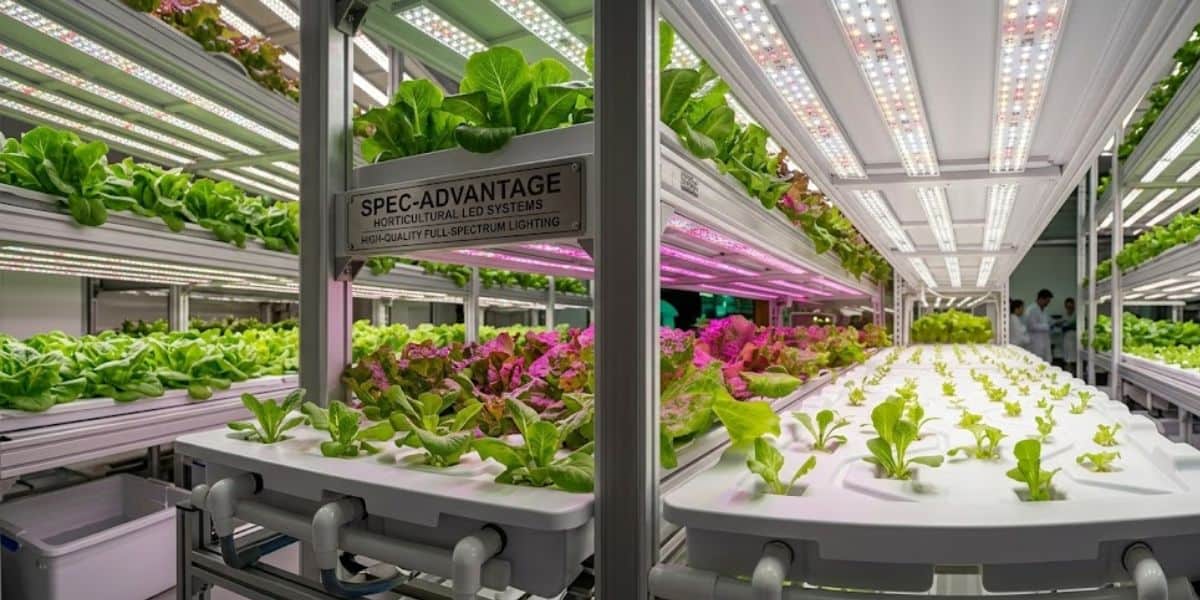
Full-spectrum LED lights are lighting systems designed to simulate natural sunlight using a balanced spectral output across multiple wavelengths.
These lights are commonly used for indoor environments where consistent lighting quality is required. Typical configurations include color temperatures between 4000K and 5000K with a Color Rendering Index (CRI) of 90 or higher.
For home use, full-spectrum LED bulbs and panels are often sufficient for small indoor growing or multi-purpose lighting. These systems are typically plug-and-play and require minimal setup.
For more structured applications, commercial lighting providers such as SignliteLED offer linear and strip-based lighting solutions that can be integrated into architectural or large-scale installations. At the same time, plant-focused lighting providers like Kingrowlight design full-spectrum systems specifically optimized for plant growth environments.
Entscheidungseinblick: Use general full-spectrum lighting for small indoor setups, but choose specialized grow lighting systems for controlled plant growth environments.
Where to Buy Spectral LED Grow Lights (Supply Channels Explained)
LED grow lights are available through different supply channels, each suited to a specific type of buyer and project scale.
Online retailers are typically used by home growers who need quick access to ready-to-use lighting systems. These platforms offer a wide range of products but usually do not provide customization options.
Lighting distributors serve mid-scale buyers who require verified specifications and more reliable product consistency. They often provide technical support and limited customization.
For commercial or large-scale projects, direct manufacturers are the most practical option. Manufacturers provide OEM and ODM solutions, allowing buyers to customize spectrum, power, and system configuration.
Buying Channel Comparison Table
| Source | Typical Buyer | Price Range | Individualisierung | Best Use |
| Online Retail | Home users | $100–$500 | No | Small setups |
| Distributor | Medium scale | $300–$1000 | Limited | Indoor farming |
| Manufacturer | Commercial | Project-based | high | Large projects |
In commercial sourcing, manufacturers such as SignliteLED are commonly used for OEM lighting production, while companies like Kingrowlight focus more on grow-specific lighting systems designed for horticulture applications.
Entscheidungseinblick: Choose your supplier based on project scale and technical requirements rather than price alone.
Full-Spectrum LED Grow Lights for Plant Growth
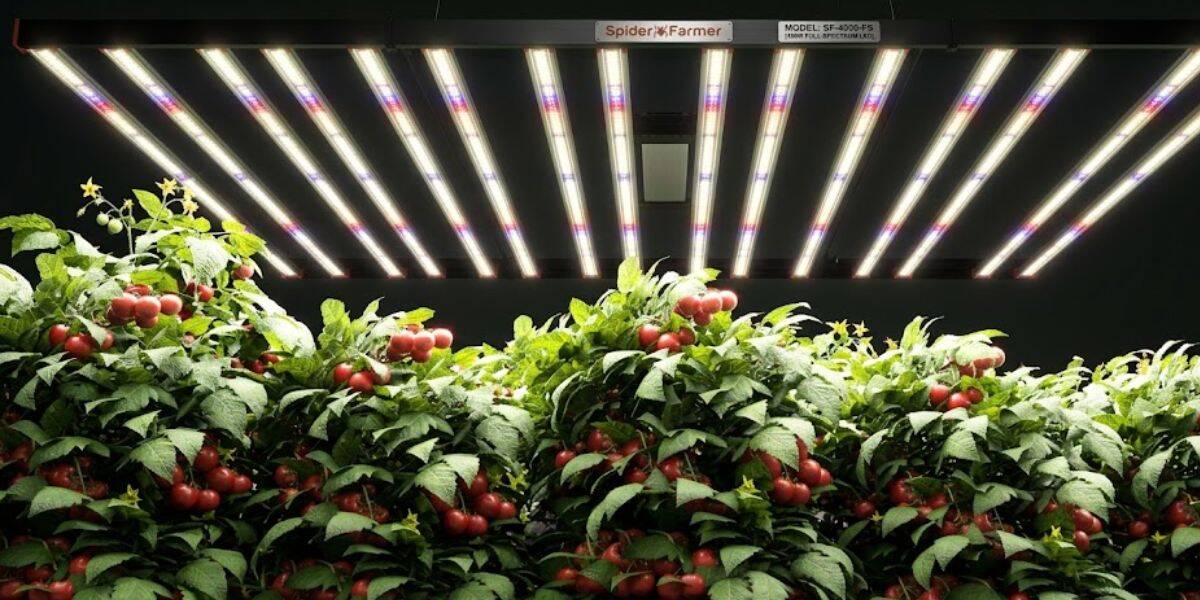
LED-Vollspektrum-Grow-Lichter are lighting systems designed to deliver wavelengths required for photosynthesis and plant development.
These systems typically include a combination of blue light (around 400–500 nm) for vegetative growth and red light (around 600–700 nm) for flowering. Full-spectrum configurations combine these wavelengths to support all growth stages.
For home growers, brands such as Spider Farmer are widely used due to their compact design and ease of use. These systems are suitable for small indoor environments where space and simplicity are important.
For larger setups, brands like Mars Hydro are commonly used because they provide wider coverage and higher output, making them suitable for mid-scale growing environments.
In more customized or commercial environments, Kingrowlight systems are often used for plant-specific spectral optimization, while SignliteLED provides supporting lighting solutions for integrated installations.
Entscheidungseinblick: Use compact systems for small setups, but move to higher-output or customizable systems as growing scale increases.
Key Technical Factors When Choosing Spectral LED Lights
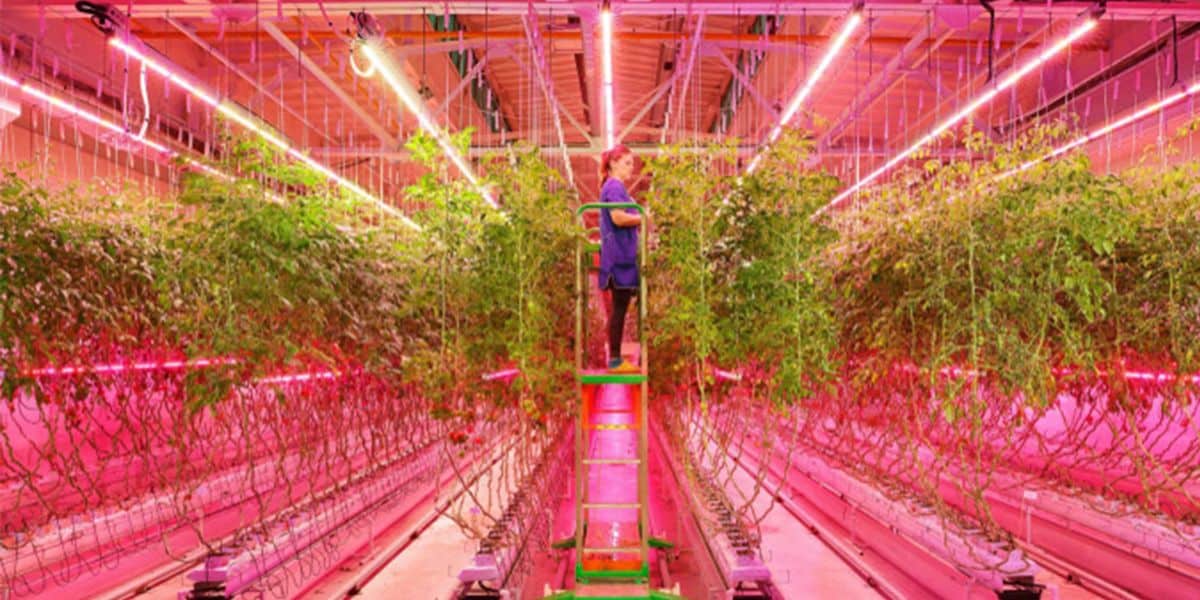
Selecting spectral LED lighting requires understanding measurable performance metrics rather than relying on general descriptions.
The most important factor is PPFD (Photosynthetic Photon Flux Density), which measures the amount of usable light reaching plants. Different growth stages require different PPFD levels.
Efficiency is another critical factor. Most modern LED grow lights operate within a range of 2.2 to 3.5 µmol/J. Higher efficiency reduces energy consumption over time.
Spectrum balance also plays a key role. A well-designed spectrum supports plant development without causing stress or uneven growth.
PPFD nach Wachstumsphase
| Stage | PPFD Range (µmol/m²/s) |
| Sämling | 100–300 |
| vegetativ | 300–600 |
| blühend | 600–1000 |
Lifespan is typically around 50,000 hours for quality systems, assuming proper thermal management.
Entscheidungseinblick: Always match PPFD and efficiency to plant stage and system size for stable growth results.
How to Evaluate Spectral LED Light Quality
Evaluating spectral LED lights requires checking both optical performance and system reliability.
Color rendering and spectral distribution should be consistent across the fixture. Systems with unstable output may cause uneven plant growth.
Thermal management is also critical. Poor heat dissipation can reduce efficiency and shorten lifespan.
Driver quality affects stability. Reliable drivers ensure consistent light output and reduce flicker or power fluctuations.
For commercial applications, working with manufacturers such as SignliteLED ensures consistent production quality, while grow-focused providers like Kingrowlight often optimize systems specifically for plant environments.
Entscheidungseinblick: Stable performance and thermal control are more important than maximum output ratings.
Kosten-gegen-Performance-Realität
Cost and performance must be evaluated together to avoid long-term inefficiency. Lower-cost systems often have lower efficiency, which increases electricity consumption over time.
Higher-quality systems may have a higher upfront cost but provide better energy performance and longer operational life.
Cost vs Efficiency Table
| Typ | Price Range | Effizienz (µmol/J) |
| Budget | $100–$300 | 2.0–2.5 |
| Mid-range | $300–$700 | 2.5–3.0 |
| High-end | $700+ | 3.0–3.5 |
In many cases, energy savings over time can offset the higher initial investment.
Entscheidungseinblick: Evaluate total operating cost, not just purchase price.
Summary of Best Places to Buy Spectral LED Lights
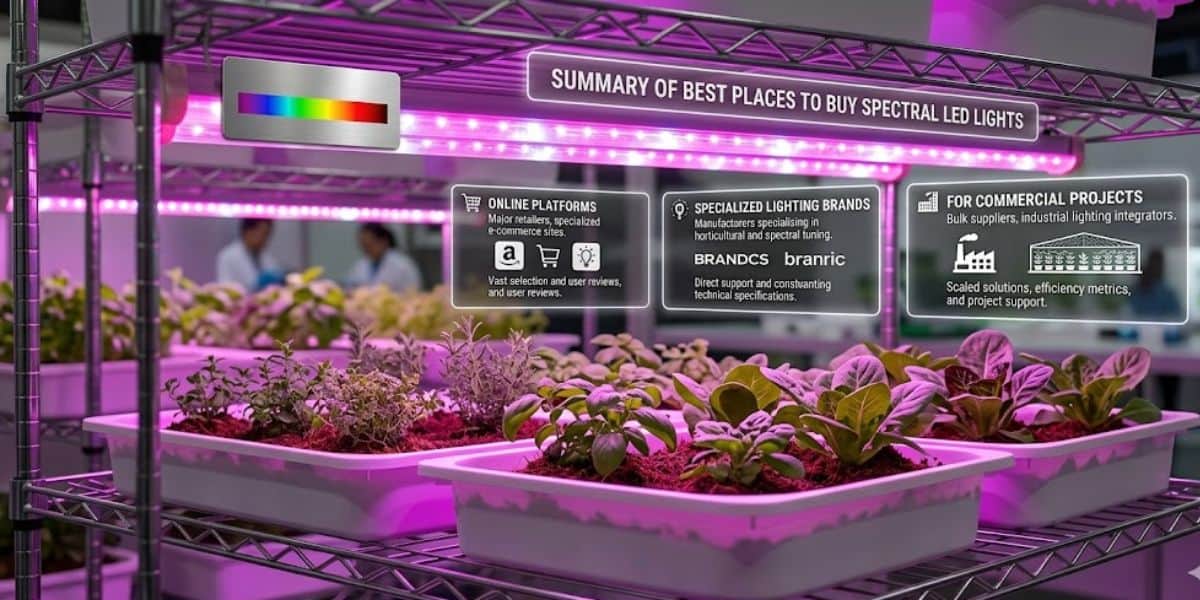
Spectral LED grow lights can be sourced from different types of suppliers depending on the project requirements.
Online platforms are suitable for home users who need simple, ready-to-use systems. These options are widely available but limited in customization.
Specialized lighting brands provide more advanced systems with controlled spectrum and improved efficiency. These are often used for dedicated indoor growing setups.
For commercial projects, working directly with manufacturers is the most effective approach. Manufacturers can provide consistent quality, customization, and better pricing for bulk orders.
In practical scenarios, SignliteLED is often used for commercial lighting integration and OEM supply, while Kingrowlight focuses on plant-specific lighting systems. Brands like Spider Farmer and Mars Hydro are commonly used for smaller or mid-scale setups.
Entscheidungseinblick: Select your supplier based on scale, customization needs, and long-term performance requirements.
Lesen Sie auch unseren Leitfaden über: Choosing Cannabis Grow Lighting for a Small Home Setup?
Common Mistakes When Buying Spectral LED Grow Lights
Common mistakes are incorrect decisions that reduce lighting effectiveness and plant performance.
- Choosing based only on price
- Ignoring PPFD requirements
- Using incorrect spectrum
- Poor coverage planning
- Not checking system efficiency
Practical Buying Checklist
A checklist helps ensure proper selection of spectral LED lighting systems.
- Efficiency ≥ 2.5 µmol/J
- Correct PPFD for plant stage
- Proper coverage area
- Reliable supplier or manufacturer
- Stable thermal design
Schluss
Spectral LED grow lights are available through multiple sources, including retailers, distributors, and manufacturers. The right choice depends on the scale of the project and the level of control required.
For home use, simple full-spectrum systems are often sufficient. For commercial applications, working with manufacturers provides better control over performance, consistency, and customization.
Understanding technical factors such as PPFD, efficiency, and spectrum is essential for making the right decision.
