
 Italian
  English
  Spanish
  French
  German
  Portuguese
  Dutch
Dutch  Thai
Thai Grow lights for blooms use a red-dominant spectrum (600–700 nm) to support flowering and fruiting in plants. This stage requires more energy compared to vegetative growth, and both light spectrum and intensity play a critical role in determining flowering success.
During the bloom phase, plants shift from leaf development to flower and fruit production. This transition depends on precise light conditions, including correct wavelength distribution and sufficient PPFD levels.
In this article, we will explain how bloom lighting works, what spectrum and intensity are required, and how to set up grow lights correctly for consistent flowering results.
Risposta rapida
What are grow lights for blooms?
Grow lights for blooms are LED lighting systems optimized with red and far-red wavelengths to support flowering stages.
What spectrum is best for flowering?
Red light (600–700 nm) is the primary driver, supported by small amounts of blue light for structural balance.
What PPFD is required for flowering?
Typically 600–900 µmol/m²/s depending on plant type and growth conditions.
What Type of Light Do Plants Need for Blooming
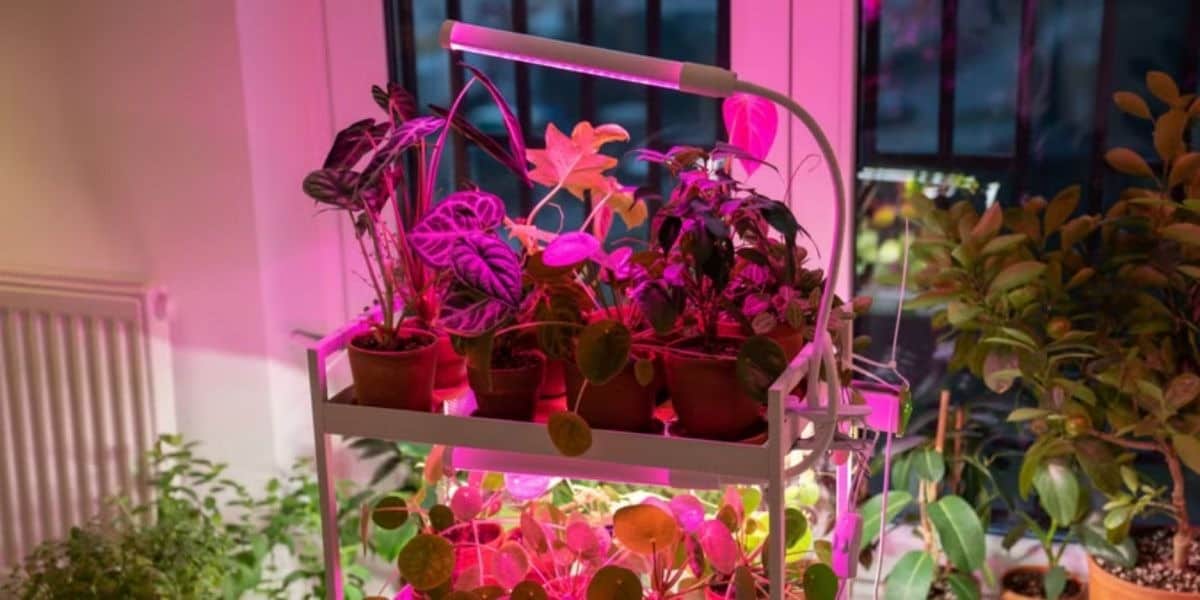
Bloom lighting refers to light conditions optimized for the flowering stage of plant growth.
Plants in the bloom phase require a spectrum that promotes reproductive processes. Red wavelengths between 600–700 nm directly influence flowering signals, while far-red light helps regulate plant response and flowering timing.
A small portion of blue light (400–500 nm) remains necessary to maintain plant structure and prevent excessive elongation. Full-spectrum LED systems typically combine these wavelengths to provide balanced growth conditions.
Spectrum for Bloom Stage
| Spectrum Type | lunghezza d'onda | Function |
| Red | 600–700 nm | Flowering trigger |
| Far Red | 700–750 nm | Enhances bloom response |
| Blue | 400–500 nm | Controls plant structure |
Approfondimento decisionale Blooming requires a red-dominant spectrum supported by controlled blue light for stable plant development.
Light Intensity Requirements for Flowering
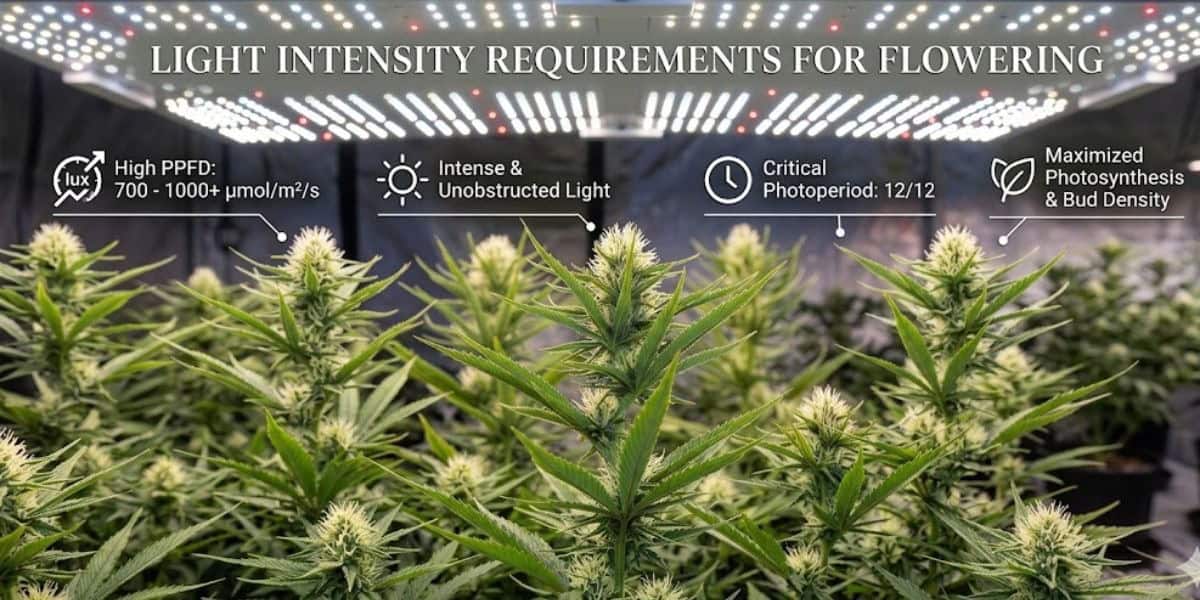
Light intensity is measured using PPFD and determines the rate of photosynthesis and flower development.
During flowering, plants require higher PPFD compared to vegetative growth. Insufficient light intensity results in smaller flowers and reduced yield, while excessive intensity can cause stress.
Maintaining a stable PPFD range ensures that plants receive adequate energy for flower formation without damaging tissue.
PPFD Requirements
| Fase di crescita | PPFD Range |
| vegetativo | 300–600 µmol/m²/s |
| fioritura | 600–900 µmol/m²/s |
Approfondimento decisionale Maintaining PPFD within 600–900 µmol/m²/s is essential for consistent flowering performance.
Types of Grow Lights for Blooms
accendere types differ in structure, efficiency, and how evenly they distribute light across the canopy.
LED bar lights are commonly used for larger growing areas because they provide uniform light distribution and higher efficiency. Quantum boards are suitable for indoor tents where space is limited but even coverage is still required. COB LEDs produce concentrated light output and are often used for targeted lighting applications.
Each type has different efficiency levels and use cases depending on the growing environment.
Light Type Comparison
| Type | Efficienza (µmol/J) | Best Use |
| LED Bars | 2.5–3.5 | Large canopy |
| Quantum Boards | 2.3–3.2 | Indoor tents |
| COB LEDs | 1.8–2.5 | Focused lighting |
Approfondimento decisionale LED bar systems are preferred when uniform canopy coverage is required for flowering.
Also Read Our Guide On: Benefits and Safe Usage of UV Light for Plants
Photoperiod and Bloom Cycle
Photoperiod is the duration of light exposure within a 24-hour cycle.
Flowering plants typically require a controlled light schedule to trigger bloom development. A standard cycle is 12 hours of light followed by 12 hours of uninterrupted darkness. This cycle signals plants to shift into reproductive growth.
Interruptions in the dark period can delay or disrupt flowering, making consistent timing critical.
Approfondimento decisionale A stable 12/12 light cycle is essential to initiate and maintain flowering.
Key Factors When Choosing Bloom Lights
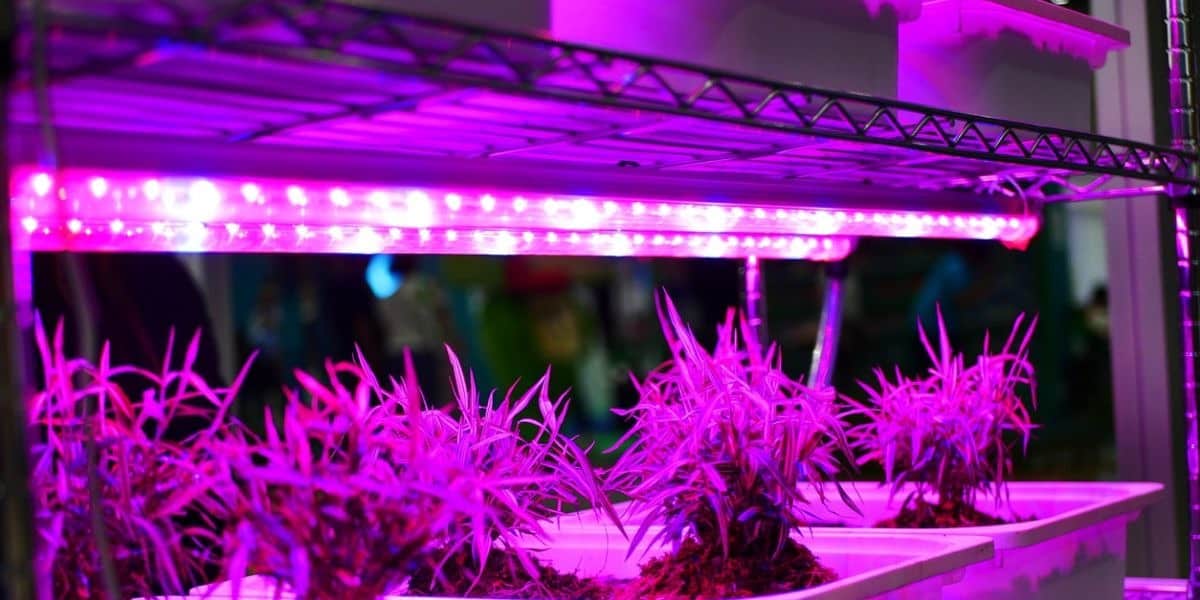
Selecting bloom lights requires evaluating measurable performance factors that directly affect plant growth.
Spectrum should include a strong red component between 600–700 nm. PPFD must fall within the 600–900 µmol/m²/s range to support flowering. Efficiency, typically between 2.0–3.5 µmol/J, determines how effectively energy is converted into usable light.
Heat management is also important, as excessive heat can stress plants and reduce growth quality.
Approfondimento decisionale The correct combination of spectrum, PPFD, and efficiency determines overall bloom performance.
Practical Setup for Bloom Lighting
Proper setup ensures uniform light distribution and stable flowering conditions across the growing area.
Lights should be positioned at an appropriate distance to maintain consistent PPFD without causing heat stress. Even coverage across the canopy prevents uneven growth and ensures all plants receive similar light exposure.
Maintaining a fixed daily lighting duration supports stable flowering cycles.
Setup Guidelines
| parametro | Gamma consigliata |
| Distance | 30–60 cm |
| Coverage | Even canopy |
| Duration | 12 hours/day |
Approfondimento decisionale Correct positioning and coverage are essential for uniform flowering results.
Common Mistakes in Bloom Lighting
Common mistakes reduce flowering performance and plant quality.
- Using PPFD below 600 µmol/m²/s during flowering
- Selecting incorrect spectrum without sufficient red light
- Inconsistent photoperiod cycles
- Uneven light distribution across the canopy
Bloom Lighting Checklist
A checklist ensures correct bloom lighting setup and consistent plant performance.
- Red-dominant spectrum (600–700 nm)
- PPFD within 600–900 µmol/m²/s
- Stable 12/12 light cycle
- Proper spacing and even coverage
conclusione
Grow lights for blooms depend on a combination of spectrum, intensity, and setup. Red wavelengths between 600–700 nm play a key role in triggering flowering, while PPFD levels determine how effectively plants develop flowers.
Consistent lighting schedules and proper setup ensure stable growth conditions. Selecting the correct lighting parameters based on measurable values leads to predictable and uniform flowering results.
