
 Thai
Thai  English
  Spanish
  French
  German
  Portuguese
  Dutch
Dutch  Italian
 Indoor mushroom cultivation depends on carefully controlled environmental conditions such as humidity, temperature, airflow, and substrate composition. Unlike plants, mushrooms do not perform photosynthesis and obtain nutrients from organic materials through fungal networks known as mycelium.
Although mushrooms do not require strong light for energy production, lighting still plays an important biological role during the fruiting stage. Controlled illumination helps regulate mushroom development and influences the direction in which fruiting bodies grow.
For this reason, indoor mushroom farms typically use artificial lighting systems that provide stable low-intensity illumination rather than high-intensity plant grow lighting.
In this guide, we explain:
• whether mushrooms actually need light to grow
• the biological growth stages of mushrooms and their lighting requirements
• the most suitable lighting technologies for indoor mushroom farms
• recommended spectrum, intensity, and operating schedules
In most indoor cultivation systems, cool white LED lighting between 5000K and 6500K operating at approximately 100–300 lux for about 8–12 hours per day during the fruiting stage provides suitable illumination for mushroom development while maintaining energy efficiency.
Key Lighting Parameters for Indoor Mushroom Cultivation
| Parameter | Typical Range | Explanation |
|---|---|---|
| Light Spectrum | 400–500 nm (blue dominant) | Blue wavelengths help stimulate fruiting |
| Light Intensity | 50–500 lux | Mushrooms require low light compared with plants |
| PPFD | 10–40 µmol m⁻² s⁻¹ | Photon intensity used in indoor farms |
| Photoperiod | 8–12 hours/day | Typical lighting schedule during fruiting |
| Distance from Light | 30–60 cm | Prevents uneven illumination and overheating |
Do Mushrooms Need Light to Grow?

Mushrooms belong to the fungal kingdom rather than the plant kingdom. Because of this biological difference, they do not rely on photosynthesis to generate energy.
Instead, mushrooms obtain nutrients from organic substrates through enzymatic decomposition carried out by the mycelium, a network of microscopic fungal filaments.
Although mushrooms do not require light for energy production, light still acts as an environmental signal that regulates certain developmental processes.
Lighting influences:
- fruiting body formation
- directional growth
- cap orientation
- developmental timing
Without appropriate light exposure during the fruiting stage, mushrooms may develop irregular shapes or grow in unintended directions.
Therefore, controlled low-intensity lighting is commonly used in indoor mushroom cultivation systems. It is important to note that mushrooms do not depend heavily on lighting compared with plants. Many experienced growers report that mushrooms can grow under a wide range of lighting conditions as long as humidity, temperature, and substrate quality are properly controlled. In most cultivation systems, light mainly serves as a developmental signal rather than an energy source.
Mushroom Growth Stages and Light Requirements
Mushroom cultivation typically includes two major biological stages.
| Growth Stage | Description | Light Requirement |
| Mycelium colonization | Mycelium spreads through the substrate and absorbs nutrients | Darkness preferred |
| Fruiting stage | Mushrooms develop visible caps and stems | Low-intensity light required |
During colonization, darkness helps support efficient mycelial growth within the substrate.
During the fruiting stage, however, controlled illumination provides environmental signals that trigger mushroom development.
Recommended Lighting Specifications for Indoor Mushroom Cultivation
| Parameter | Recommended Range | Explanation |
|---|---|---|
| Wavelength | 430–470 nm (blue dominant) | Blue light helps trigger fruiting body formation |
| Color Temperature | 5000–6500 K | Similar to natural daylight |
| Light Intensity | 200–700 lux | Provides environmental signal without overheating |
| PPFD | 10–40 µmol m⁻² s⁻¹ | Typical photon flux for mushroom fruiting |
| Photoperiod | 8–12 hours/day | Supports normal fruiting cycles |
| Distance from substrate | 30–60 cm | Prevents excessive light exposure |
Several studies have examined the role of light spectrum in mushroom development. Research on oyster mushrooms shows that blue light wavelengths between approximately 430 and 470 nm stimulate fruiting body formation and improve cap morphology. These findings explain why cool white LED lighting with strong blue spectral components is commonly used in commercial mushroom farms.
What Type of Lighting Is Best for Growing Mushrooms Indoors
Indoor mushroom cultivation does not require high-power horticultural lighting used for plant agriculture. Instead, the objective is to provide stable illumination that supports fruiting without significantly increasing temperature inside the grow room.
Three lighting options are commonly used.
LED Lighting
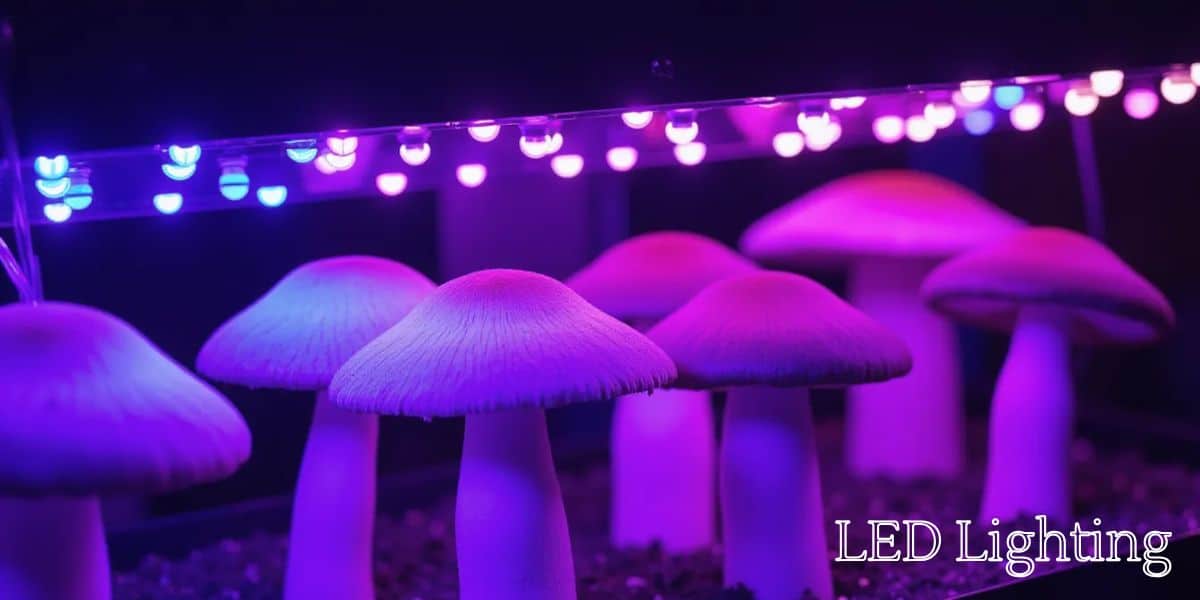
LED lighting has become the most widely used lighting solution in indoor agriculture because of its efficiency and operational stability.
Typical LED grow lighting systems used in controlled environments may provide:
| Parameter | Typical Value |
| Operational lifespan | ~50,000 hours |
| Luminous efficiency | ~120–150 lm/W |
| Photon efficiency | ~2.7–2.8 μmol/J |
Because LEDs generate relatively low radiant heat compared with traditional lamps, they are suitable for temperature-sensitive indoor cultivation environments.
Fluorescent Lighting
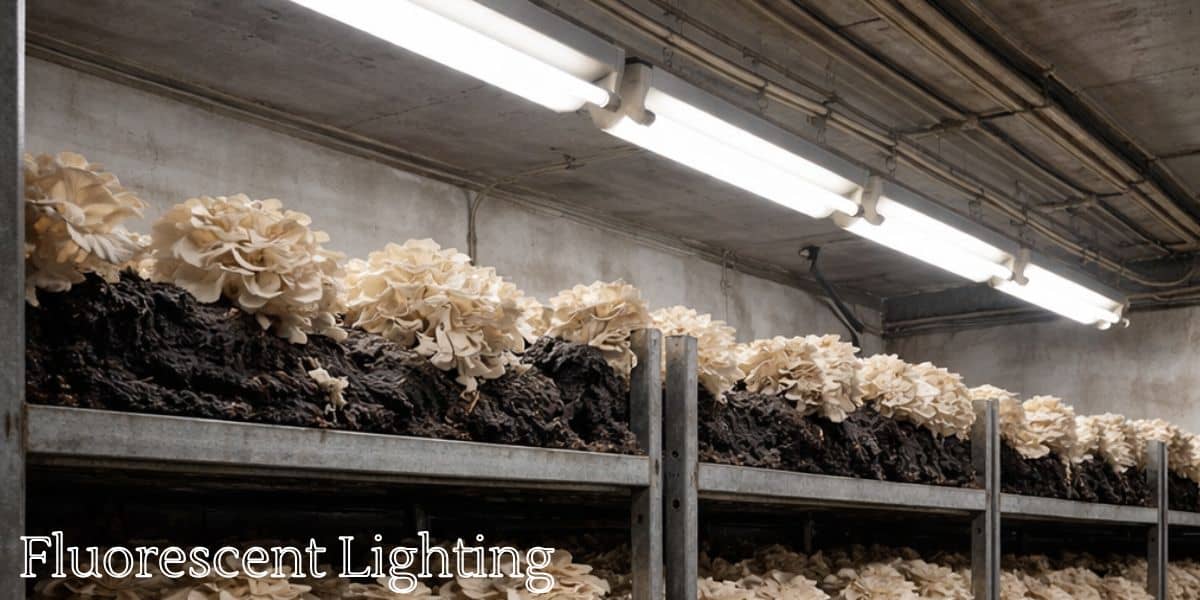
Fluorescent lamps were historically used in indoor mushroom farms before LED technology became widely available.
Typical fluorescent lighting characteristics include:
| Parameter | Typical Value |
| Operational lifespan | 10,000–20,000 hours |
| Luminous efficiency | 60–90 lm/W |
| Typical power consumption | 36–40 W per tube |
Although fluorescent lighting can still support mushroom cultivation, it generally requires more frequent replacement and produces more heat than LED systems.
Indirect Natural Lighting
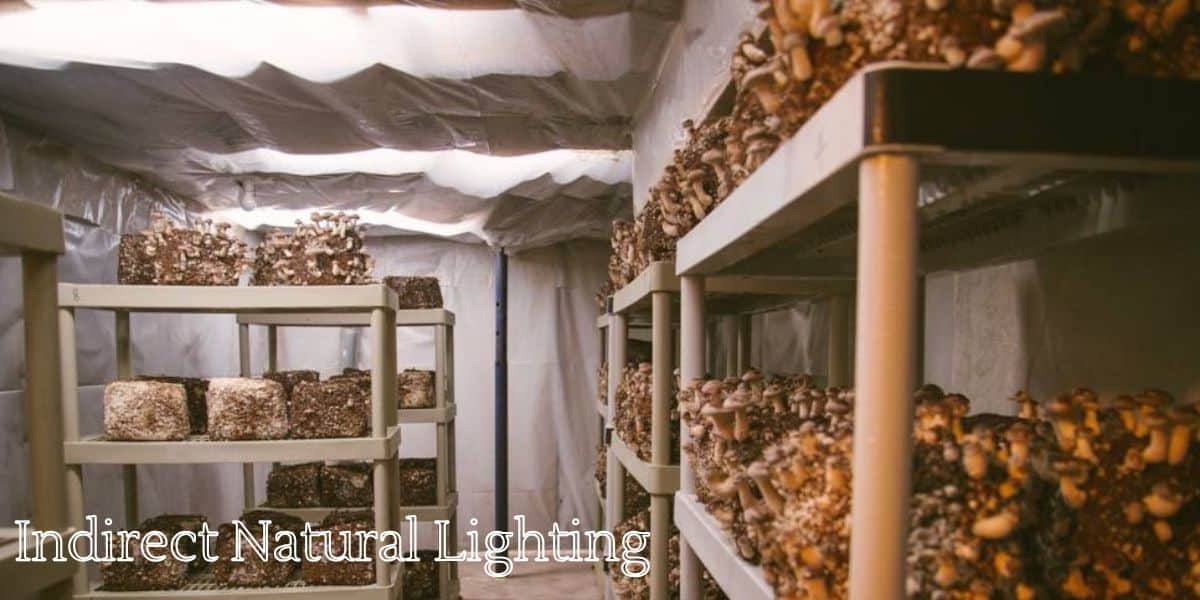
Some small-scale mushroom growers use indirect daylight entering through windows or translucent panels.
However, natural lighting provides limited control over intensity and duration, which makes artificial lighting systems more reliable for controlled indoor farming environments.
Recommended Light Spectrum for Mushrooms
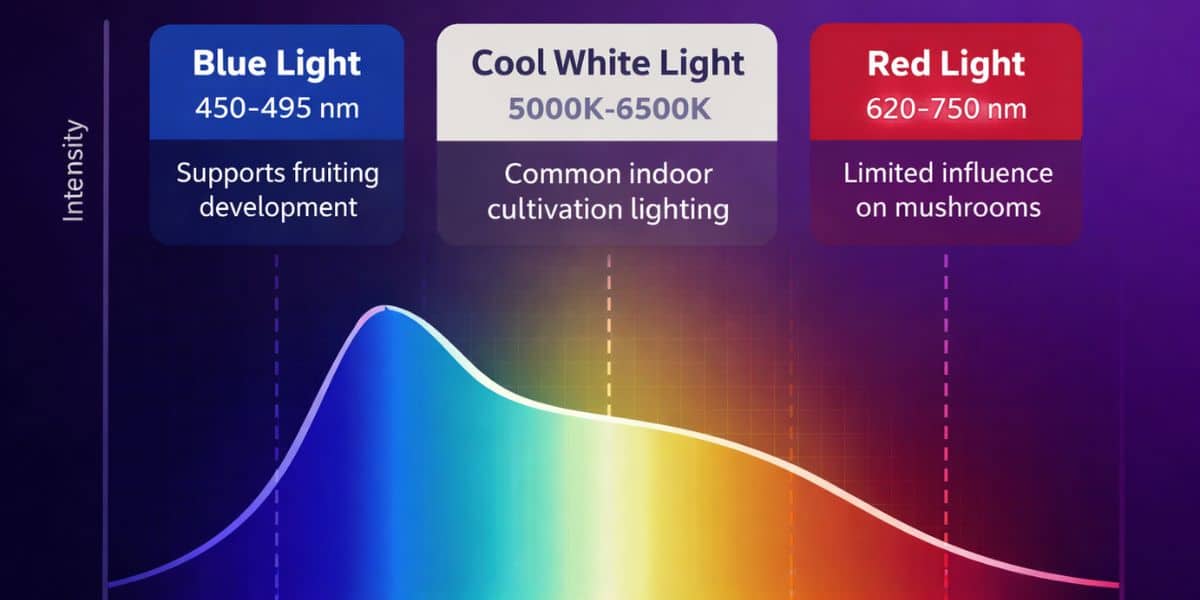
Light spectrum refers to the range of wavelengths emitted by a lighting system.
Certain wavelengths can influence biological processes in fungi. Research suggests that blue spectrum light plays a role in stimulating fruiting body formation in several mushroom species.
| Light Type | Wavelength Range | Typical Effect |
| Blue light | 450–495 nm | Supports fruiting body formation |
| Cool white light | 5000K–6500K | Common lighting used in mushroom farms |
| Red light | 620–750 nm | Limited influence on mushroom development |
Many LED grow lights combine multiple spectral components such as 3000K warm white, 6500K daylight white, and 660 nm red wavelengths. Several studies have examined the role of light spectrum in mushroom development. Research has shown that blue LED wavelengths between approximately 430 and 470 nm can stimulate fruiting body formation and influence cap morphology in species such as oyster mushrooms. These findings explain why cool white LED lighting with strong blue spectral components is commonly used in commercial mushroom farms.
Blue Light (430–470 nm)
Blue wavelengths between 430 and 470 nm are the most important lighting component for mushroom fruiting. Research in mushroom cultivation shows that blue light acts as an environmental signal that triggers the formation of fruiting bodies and improves cap development. Many commercial mushroom farms use cool white LEDs because they contain strong blue spectrum components.
Red Light (620–660 nm)
Red wavelengths around 620–660 nm can influence mycelial expansion and early primordia formation. However, mushrooms do not rely heavily on red light compared with photosynthetic crops. As a result, red light typically plays a secondary role in mushroom cultivation lighting.
Cool White Full Spectrum Lighting
Most indoor mushroom farms use cool white lighting in the range of 5000–6500K. These lights provide a balanced spectrum that includes blue wavelengths required for fruiting while remaining energy efficient and easy to install in large cultivation rooms.
Optimal Light Intensity for Indoor Mushroom Farms
Indoor mushroom cultivation requires moderate light intensity rather than high-power lighting used for plant photosynthesis. Mushrooms do not use light as an energy source, but light acts as an environmental signal that helps regulate fruiting body development and normal morphology.
In commercial mushroom cultivation, light intensity is usually measured in lux, which represents the amount of visible light reaching the growing surface. Studies and commercial farming practices suggest that mushrooms typically respond well to relatively low lighting levels compared with most horticultural crops.
Most indoor mushroom farms maintain approximately 200–700 lux during the fruiting stage. This range provides sufficient environmental stimulation for mushroom development while preventing excessive heat buildup or substrate drying.
Lower light levels may lead to weaker fruiting signals and irregular cap development, while excessively bright lighting can increase temperature and moisture loss in the growing environment.
In commercial cultivation environments, light intensity is often measured in lux or PPFD (photosynthetic photon flux density). Mushroom farms typically operate between 50 and 500 lux, depending on species and room layout. In controlled indoor systems, light levels may also be measured around 10–40 µmol m⁻² s⁻¹ PPFD, which is significantly lower than the light intensity required for plant cultivation.
Recommended Light Intensity Range for Mushroom Cultivation
| Cultivation Stage | Recommended Light Intensity | Purpose |
| Mycelium colonization | 0–50 lux | Light is generally not required during substrate colonization |
| Primordia formation | 100–300 lux | Light helps trigger the initial formation of fruiting bodies |
| Fruiting stage | 200–700 lux | Supports healthy mushroom cap development and morphology |
In practical cultivation environments, many growers maintain around 300–500 lux, which provides stable and consistent lighting conditions without unnecessary energy consumption.
Because mushroom farms often use multi-layer shelving systems, light distribution should also remain uniform across all cultivation trays. Uneven lighting may result in inconsistent fruiting patterns across different rack levels.
For this reason, indoor mushroom farms commonly install LED light bars, LED strip lighting, or fluorescent tubes above cultivation shelves, ensuring that each growing layer receives similar illumination levels.
Recommended Lighting Duration
Lighting duration, also known as the photoperiod, determines how long lights remain active during each day.
Indoor mushroom farms typically use the following schedule:
| Growth Stage | Lighting Duration |
| Mycelium colonization | Dark conditions |
| Fruiting stage | 8–12 hours per day |
Maintaining consistent lighting cycles helps regulate the biological processes that trigger mushroom development.
Indoor Mushroom Lighting Setup
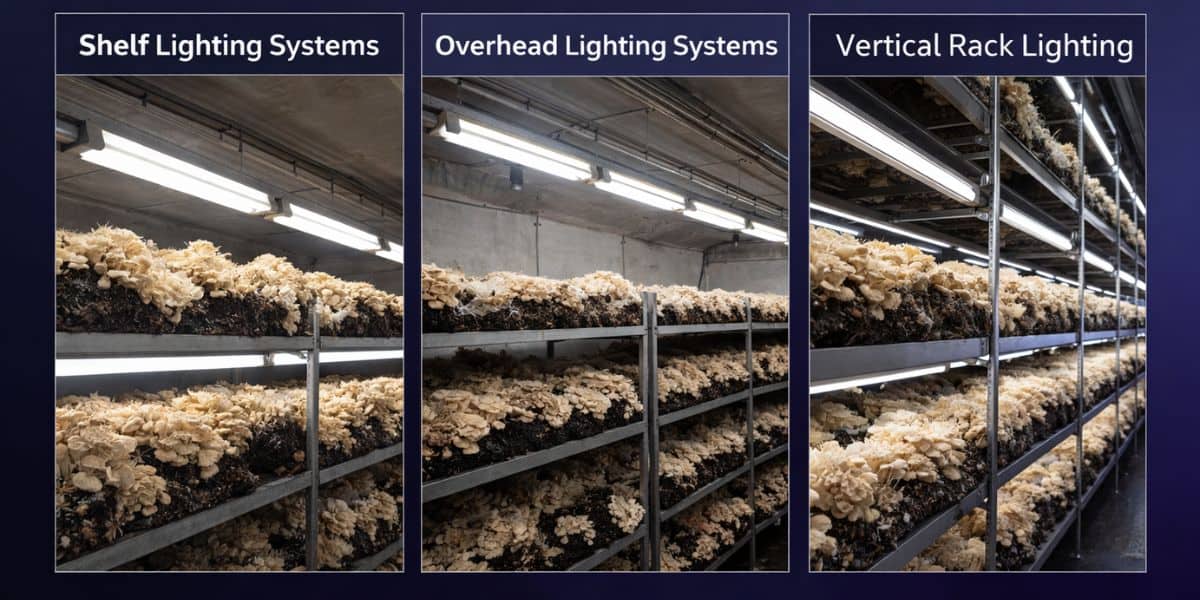
Lighting system design should ensure uniform illumination across cultivation trays.
Common indoor mushroom farm lighting configurations include:
Shelf Lighting Systems
LED light bars or LED strips mounted above growing shelves provide consistent illumination across multiple cultivation layers.
Overhead Lighting Systems
Large cultivation rooms often use ceiling-mounted LED panels that distribute light evenly throughout the growing area.
Vertical Rack Lighting
Multi-tier rack systems may include LED lighting installed between shelves to ensure uniform light distribution.
Uniform illumination helps maintain consistent mushroom size and growth patterns.
Small indoor mushroom grow rooms often use simple low-intensity lighting systems
Typical setup:
• Lighting type: 6500K LED strip or LED light bar
• Light intensity: 200–300 lux
• Lighting cycle: 10–12 hours per day
• Installation height: 30–40 cm above substrate
• Lighting control: automatic timer
In larger commercial farms, vertical rack systems may use LED bar lights installed on each shelf level, providing uniform illumination across all growing trays while maintaining low heat output.
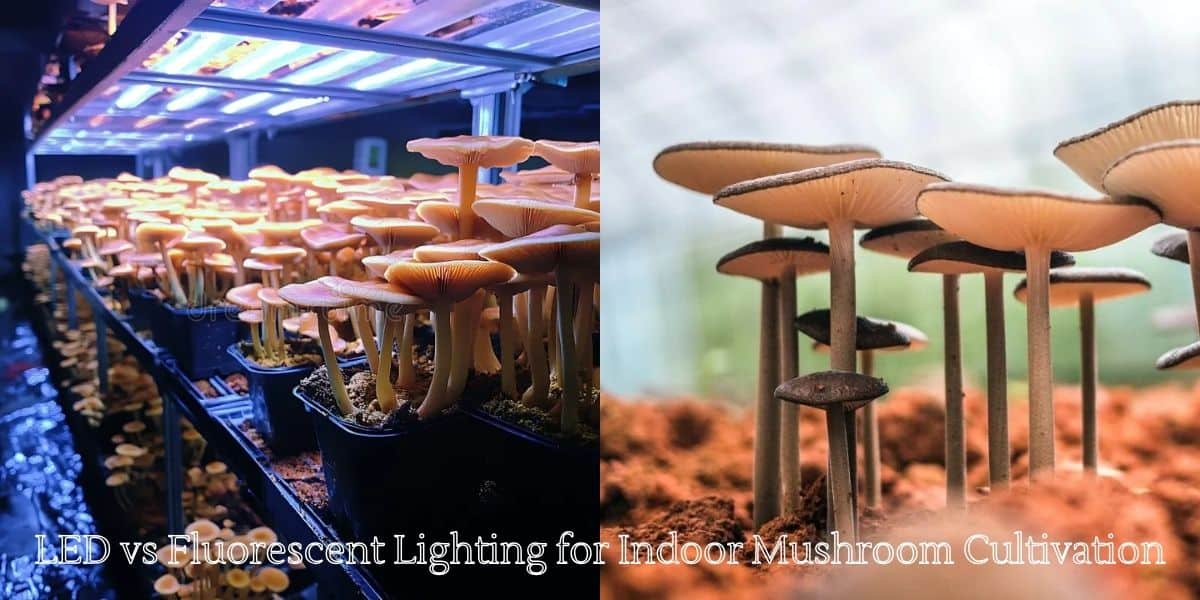
LED vs Fluorescent Lighting for Indoor Mushroom Cultivation
| Lighting Type | Efficiency | Heat Output | Typical Lifespan | Common Use |
|---|---|---|---|---|
| LED | 120–160 lm/W | Low | ~50,000 hours | Commercial indoor farms |
| Fluorescent | 60–90 lm/W | Moderate | 10,000–20,000 hours | Small hobby setups |
| HID / HPS | 80–120 lm/W | High | 15,000–24,000 hours | High-intensity plant farms |
Both LED and fluorescent lighting systems can support indoor mushroom cultivation, but their technical performance differs.
| Feature | LED Lighting | Fluorescent Lighting |
|---|---|---|
| Typical Efficiency | 120–160 lm/W | 60–90 lm/W |
| Lifespan | ~50,000 hours | 10,000–20,000 hours |
| Heat Output | Low (≈30–40% less heat) | Moderate |
| Power Consumption | Lower energy consumption | Higher electricity usage |
| Maintenance | Minimal replacement | Tubes require periodic replacement |
Because of improved efficiency and longer lifespan, LED lighting has become the preferred option for modern indoor mushroom farms.
Common Lighting Mistakes in Mushroom Cultivation
Several lighting mistakes can reduce efficiency or negatively affect mushroom growth.
Using High-Power Plant Grow Lights
Plant grow lights designed for photosynthetic crops often produce much higher light intensity than mushrooms require. These lighting systems are typically optimized for photosynthesis in plants rather than fungal cultivation. If you want to understand how plant grow lighting systems are designed and how they differ from mushroom cultivation lighting, you can also explore our guide on Something To Consider Regarding LED Plant Lighting.
Excessive Light Intensity
Providing more than 500 lux generally does not improve mushroom growth and increases electricity consumption unnecessarily.
Uneven Lighting Distribution
Poor lighting placement can create inconsistent growth across cultivation trays.
Continuous Lighting Without Dark Periods
Mushrooms typically respond better to controlled lighting cycles rather than continuous illumination.
Typical LED Grow Light Specifications Used in Indoor Farming
Many indoor agriculture systems use LED lighting designed for stable long-term operation.
| Parameter | Typical Value |
| Operational lifespan | ~50,000 hours |
| Luminous efficiency | ~140 lm/W |
| Photon efficiency | ~2.7–2.8 μmol/J |
| Spectrum configuration | 3000K + 6500K + 660 nm |
These specifications help ensure reliable lighting performance while maintaining energy efficiency.
Research on Lighting and Mushroom Development
Several scientific studies have examined the influence of light spectrum on mushroom cultivation.
Research by Jang et al. (2013) found that blue LED lighting can improve fruiting body formation in oyster mushrooms.
Studies by Huang et al. (2017) also reported that controlled LED lighting can influence mushroom yield and antioxidant activity.
These findings support the use of blue-dominant or cool-white LED lighting in many indoor mushroom cultivation systems.
Final Decision: What Lighting Is Best for Growing Mushrooms Indoors?
For most indoor mushroom cultivation systems, cool white LED lighting between 5000K and 6500K provides the most practical solution.
Operating LED lighting systems at 200–700 lux for approximately 8–12 hours per day provides sufficient illumination for mushroom development while maintaining stable environmental conditions.
With typical operational lifespans approaching 50,000 hours and luminous efficiencies around 140 lm/W, LED lighting systems provide reliable long-term operation with reduced maintenance requirements.
For these reasons, LED lighting has become the preferred lighting technology for modern indoor mushroom cultivation environments.
Conclusion
Indoor mushroom cultivation requires moderate lighting levels rather than high-intensity plant grow lights. Blue-dominant light spectra between 430 and 470 nm, combined with cool white lighting around 5000–6500K, provide suitable environmental signals for fruiting body development.
Most indoor mushroom farms maintain 200–700 lux with lighting periods of 8–12 hours per day. LED lighting systems are widely used because they offer higher energy efficiency, longer lifespan, and lower heat output compared with fluorescent lighting.
